
“The postman always rings twice” An Examination of Crime Inside Buildings

Description

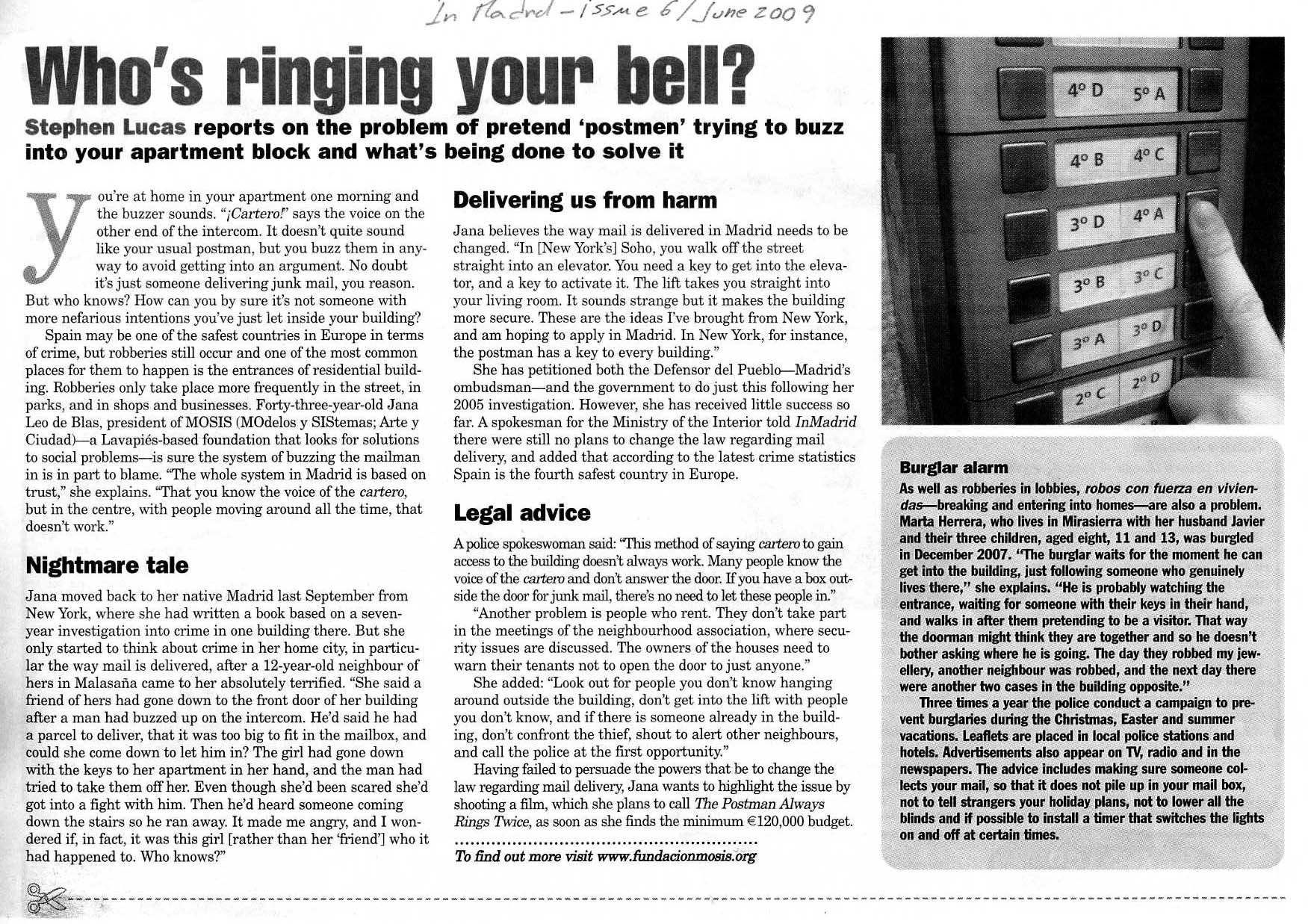
Efforts to try to change the way mail is delivered, ringing the bell
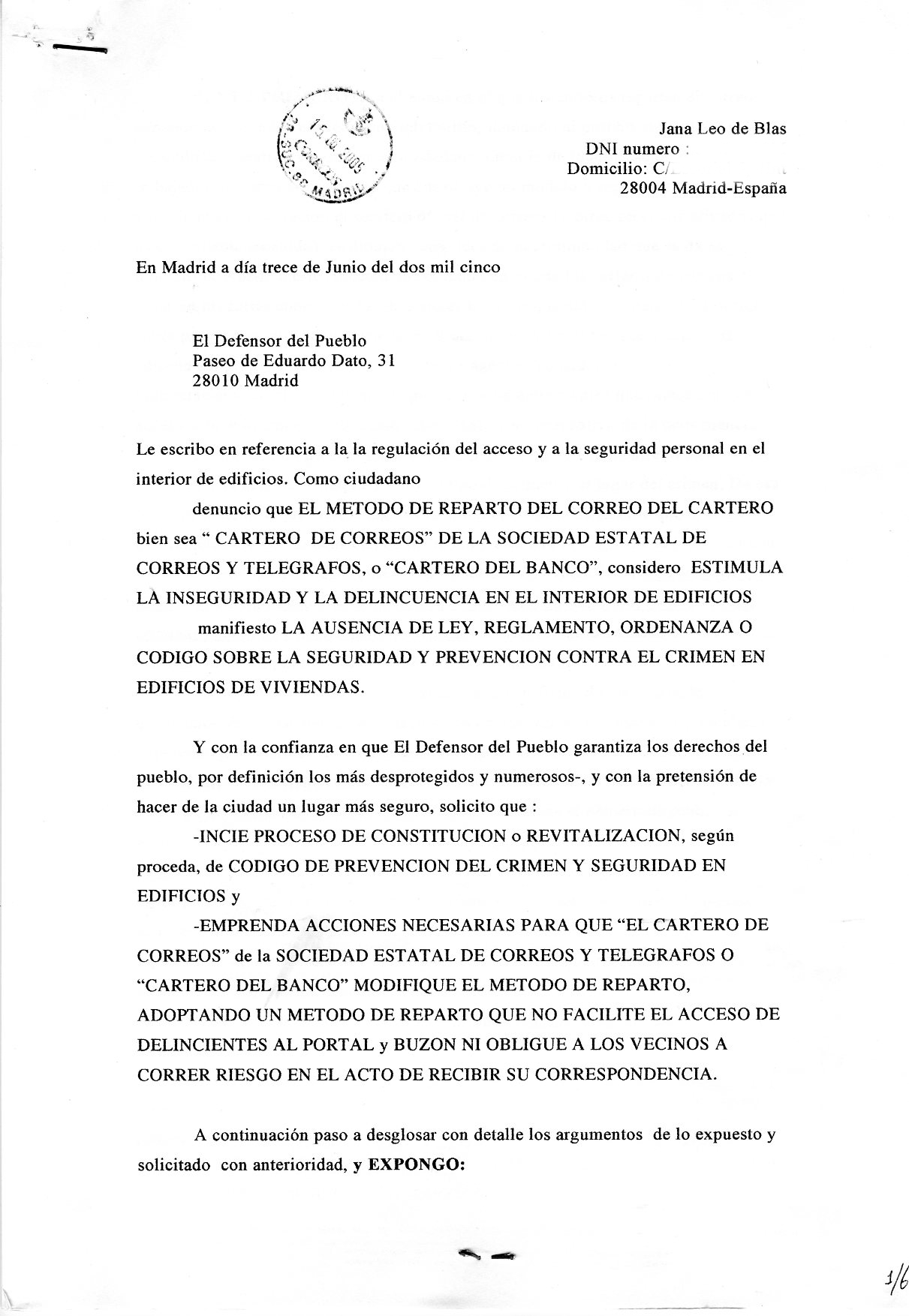
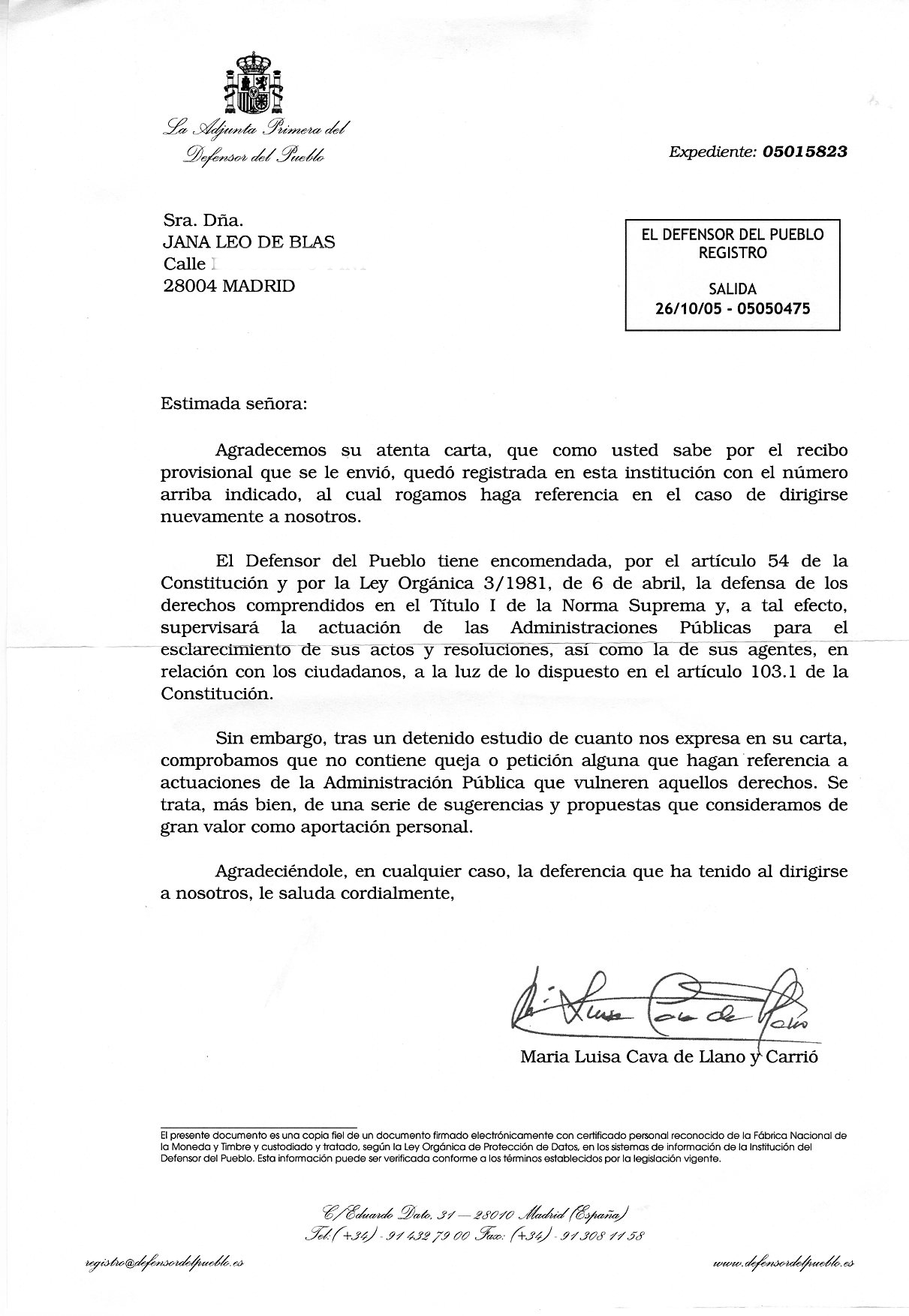
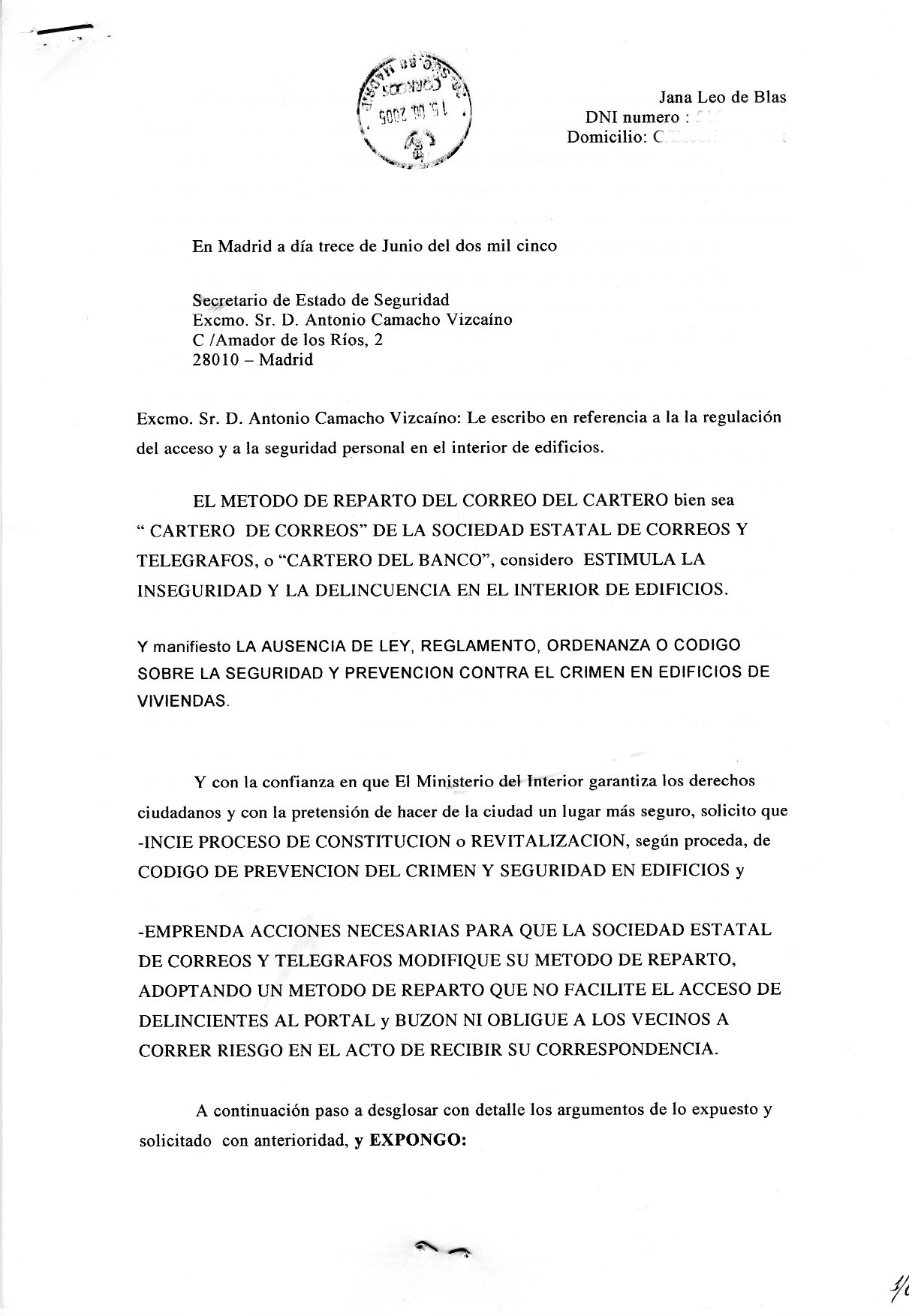
Cartas a organismos públicos
Prensa
Find dead a women in the cleaning room inside a building

“The postman always rings twice” An Examination of Crime Inside Buildings


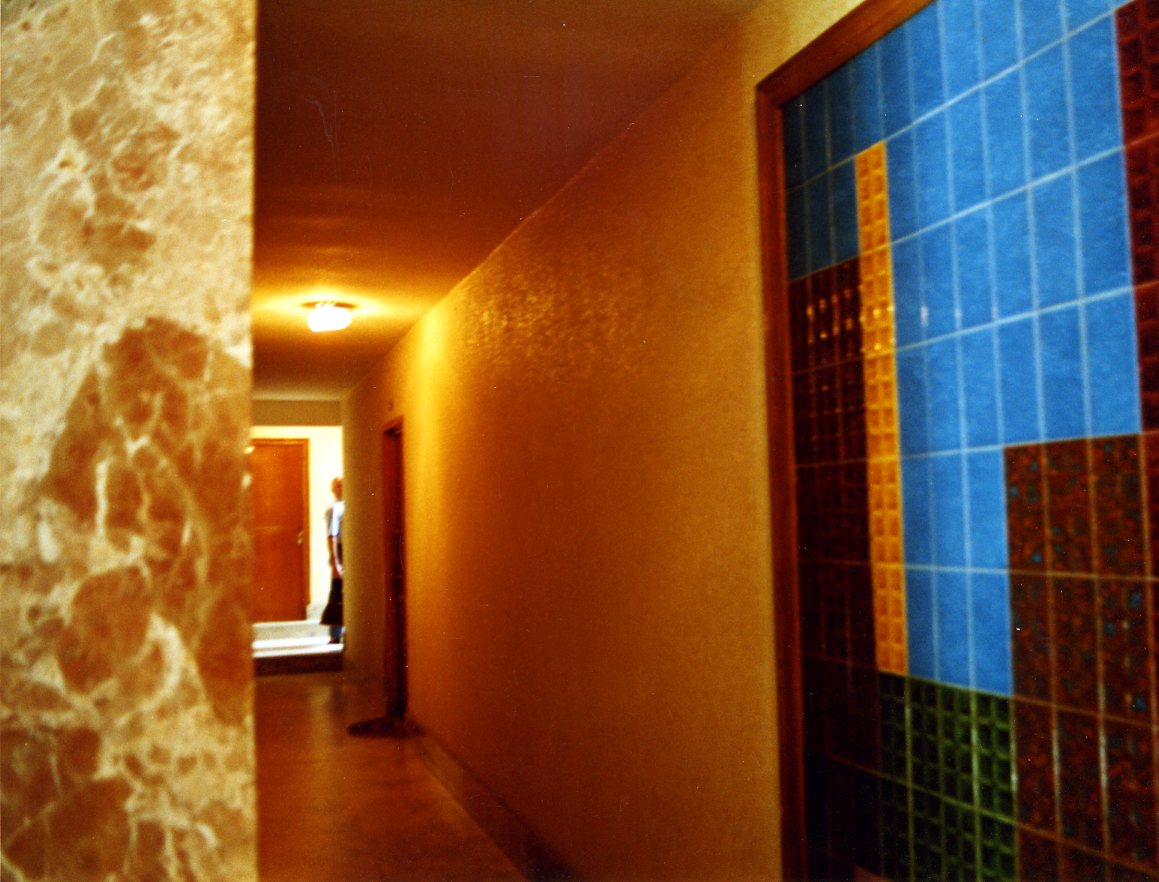
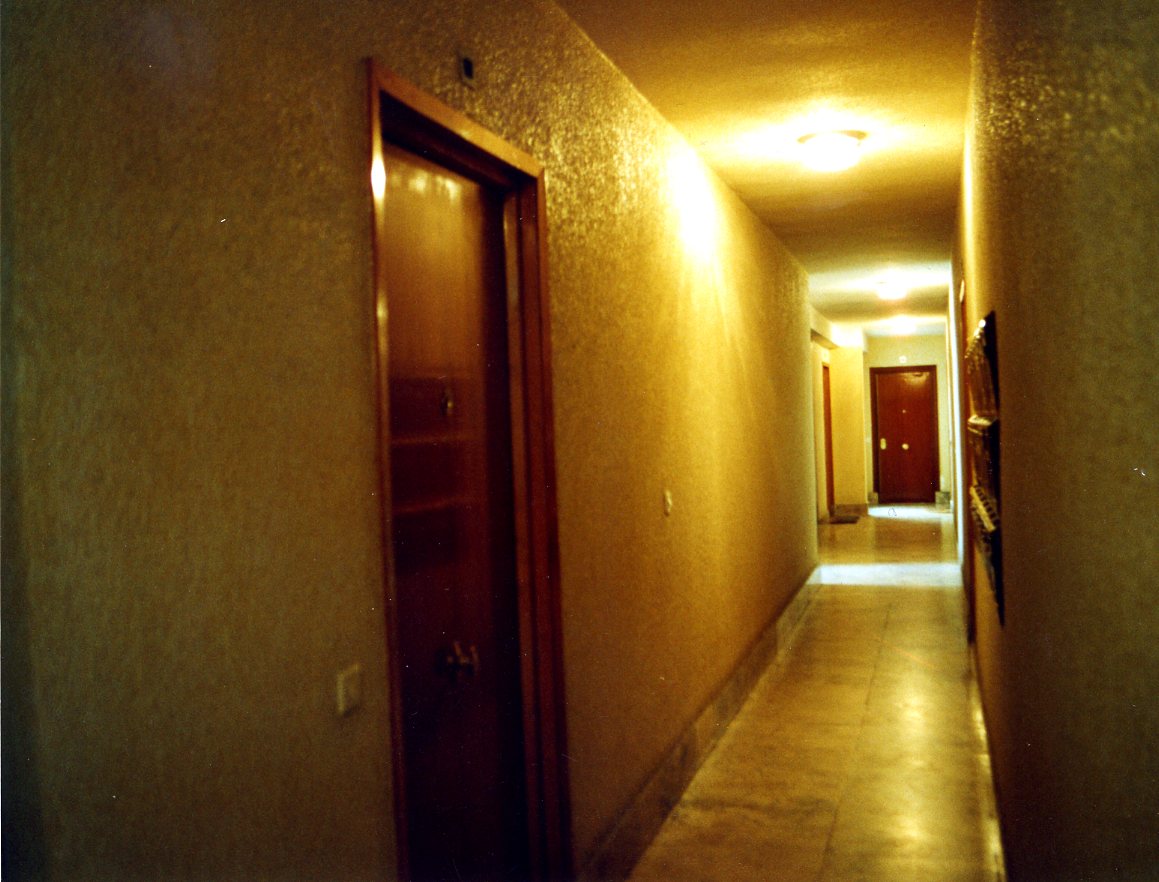
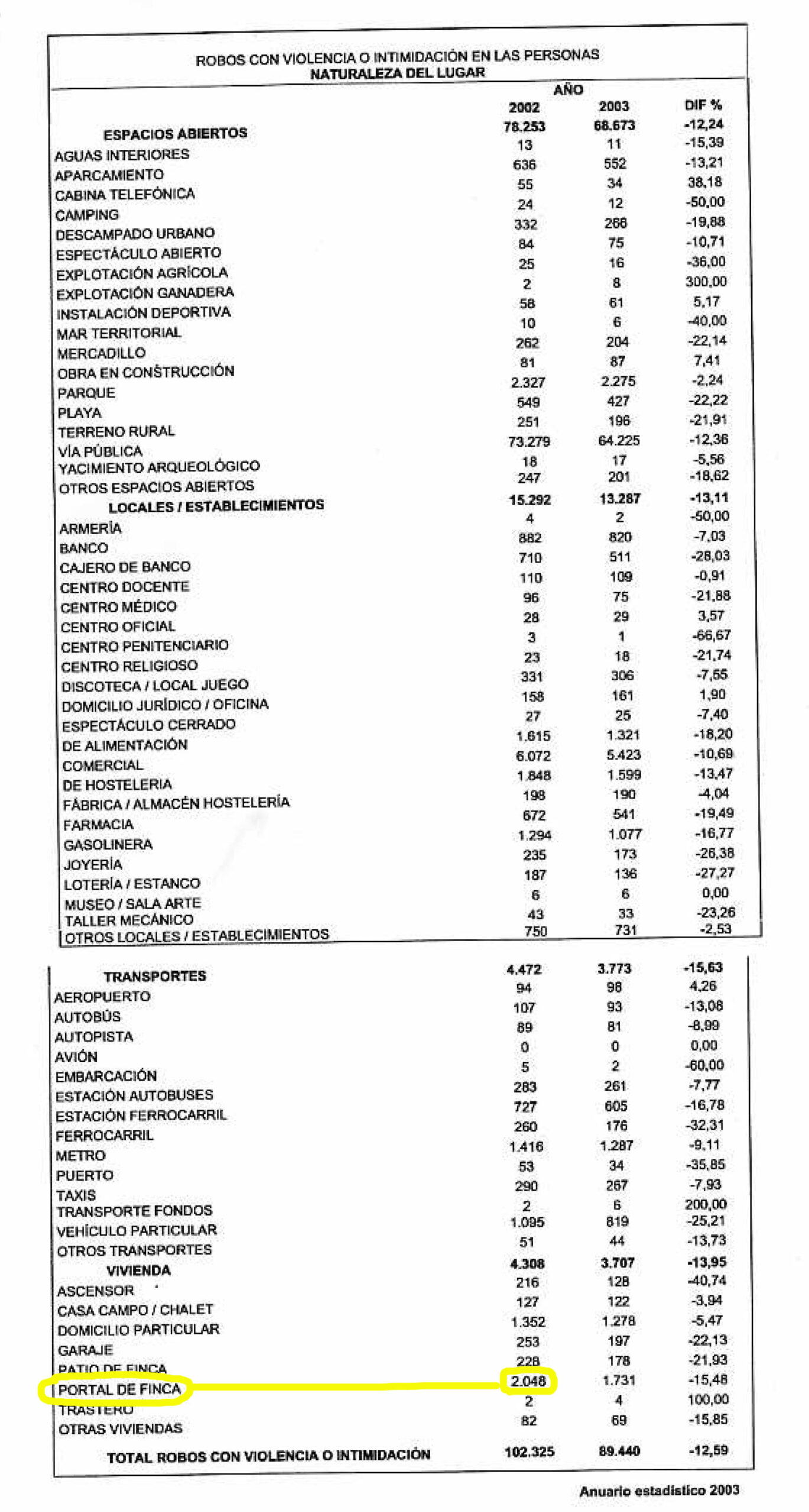
We live indoors, yet another form of domestic violence exists: crime also occurs inside buildings. Building entrances rank third in terms of the number of violent robberies—surpassed only by public streets and shopping malls—and are considered more dangerous than parks. According to the Ministry of the Interior’s 2003 statistical yearbook (covering the year 2002), the number of robberies involving violence or intimidation against individuals—categorized by location—was as follows: public streets (73,279); commercial premises (6,072); building entrances (2,048); and parks (2,327).
"Do not operate the intercom if you do not know who is calling; you compromise the safety of all your neighbors." http://www.mir.es/SGACAVT/seguridad/consejos/robo.html. Every day, someone buzzes our intercom claiming to be the "mail carrier" or a "bank courier." Delivery personnel change frequently, and there is no way to verify that the person claiming to be the mail carrier actually is one. The postal service's delivery policy contradicts the Ministry of the Interior's crime prevention recommendations—and, in fact, facilitates crime; for instance, a neighbor was assaulted after opening the door to a person claiming to be a mail carrier with a registered letter.
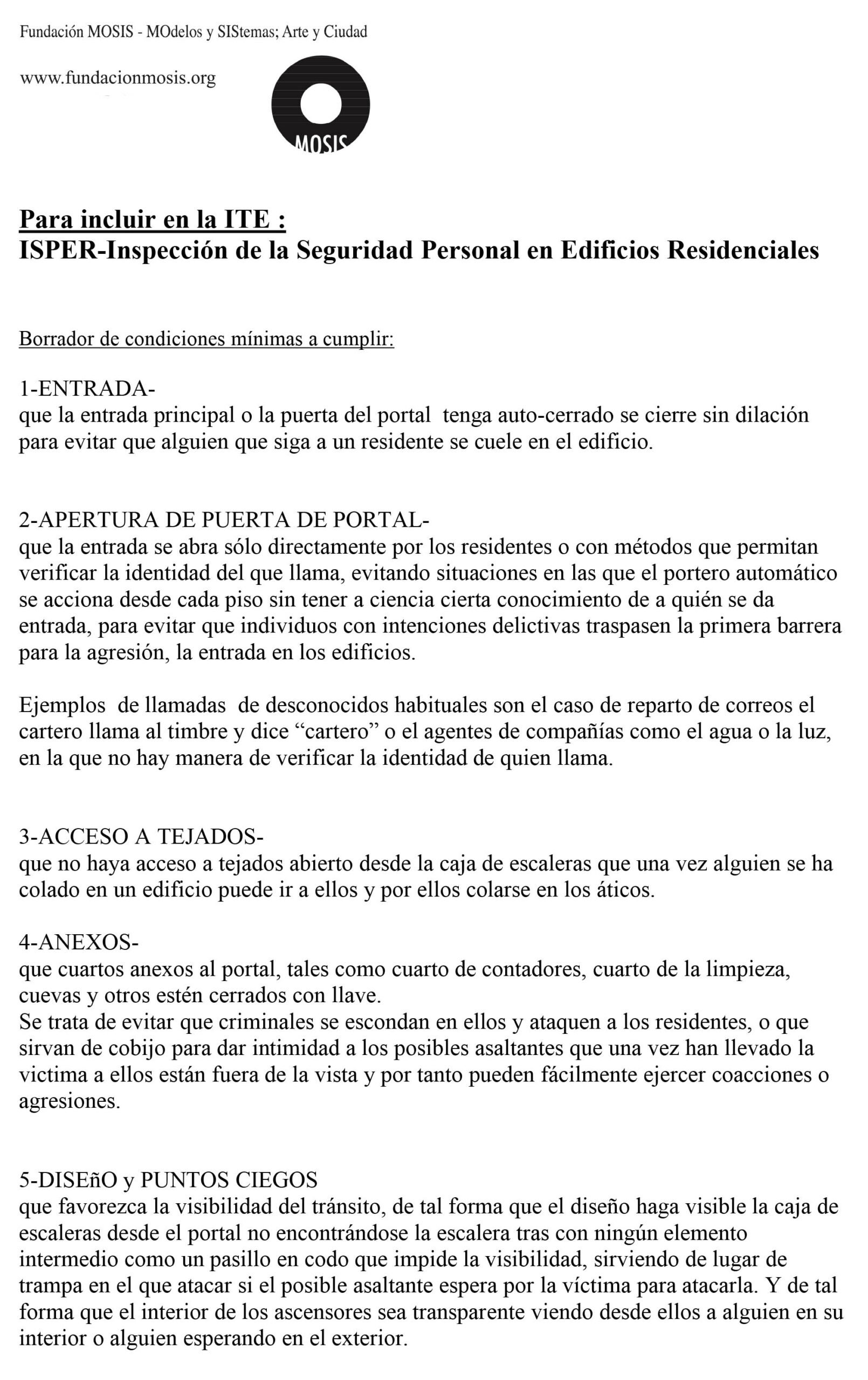
Our goal is to: A) – Implement an ISPER (Personal Safety Inspection for Residential Buildings) to safeguard personal safety by requiring buildings to adopt basic standards aimed at preventing violence within the premises. The ISPER could be integrated into the existing ITE (Technical Building Inspection). When figures are this high, policies must be public; just as seatbelt use is mandatory, building safety is not a private matter. B) – Produce a film to raise public awareness of the issue. C) – Change the mail delivery system, as the current method endangers individuals by prompting them to open their doors without any way to verify the mail carrier’s identity.
THE BUILDING ENTRANCE—ARCHITECTURE’S COMPLICITY IN GENDER-BASED VIOLENCE


“Found dead in the cleaning closet,” the headlines read, explaining: a woman between 30 and 40 years old, found dead with signs of violence in a cleaning closet within a building at 6 Jesús Méndez Street in the capital’s Salamanca district… Neighbors say the neighborhood is very quiet and that they heard nothing.


How is it that the neighbors heard nothing? And if the closet’s conditions and location mean nothing can be heard, is it safe to have such rooms? The next question is: How did she end up in the cleaning closet? And how was access to the closet gained—was the closet door open? Is this door always open? What is the point of leaving the door open to a space where, once inside, one can do anything without being heard?


These closets are found in many Madrid buildings—usually beneath the staircases—and are like a cavity in a tooth that easily harbors decay.


One question remains unanswered: How did they get into the building entrance? Did someone slip in behind a resident and hide in the cleaning closet, or did a resident simply open the door after hearing someone say “mailman”? Every day, people enter building lobbies by announcing “mailman” over the intercom—some are, and some aren’t.


Residents continue to leave their closet doors open, thinking nothing bad will happen, while institutions still fail to enforce building safety inspections—even though police statistics show that the building entrance is the second most common site for violent crimes (the street ranks first). And this makes sense: certain assaults require a degree of privacy, yet gaining access to a private home is difficult—there is a lock in the way. Given these conditions, the building entrance is the quintessential “crime scene,” and “architecture” becomes complicit in the violence.


Jana Leo

“The postman always rings twice” An Examination of Crime Inside Buildings