
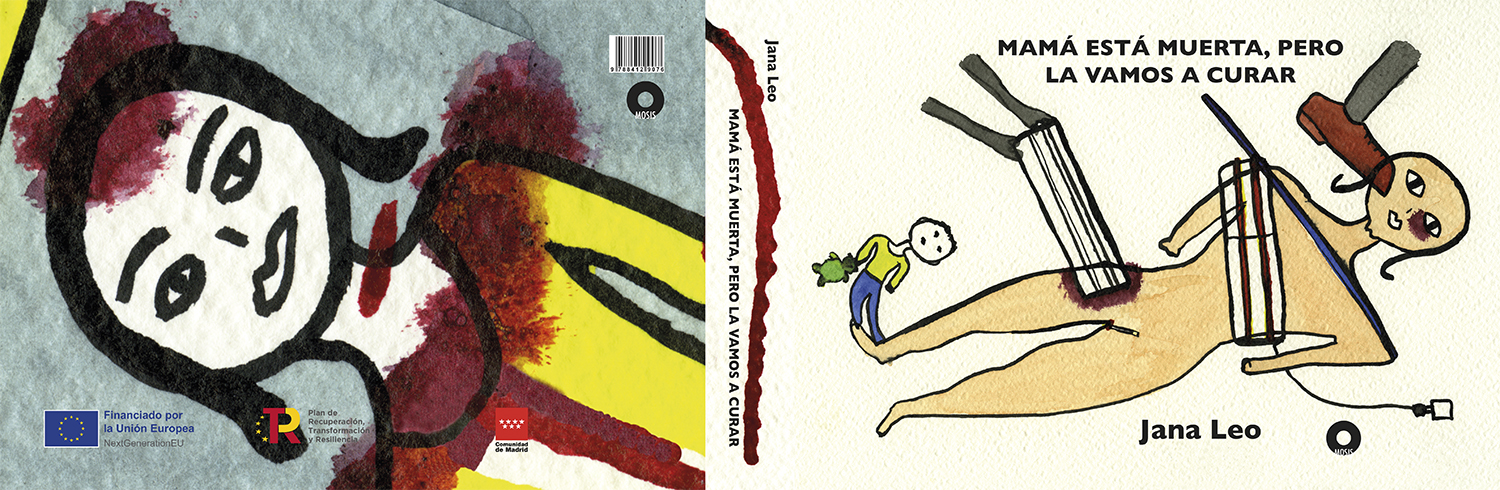
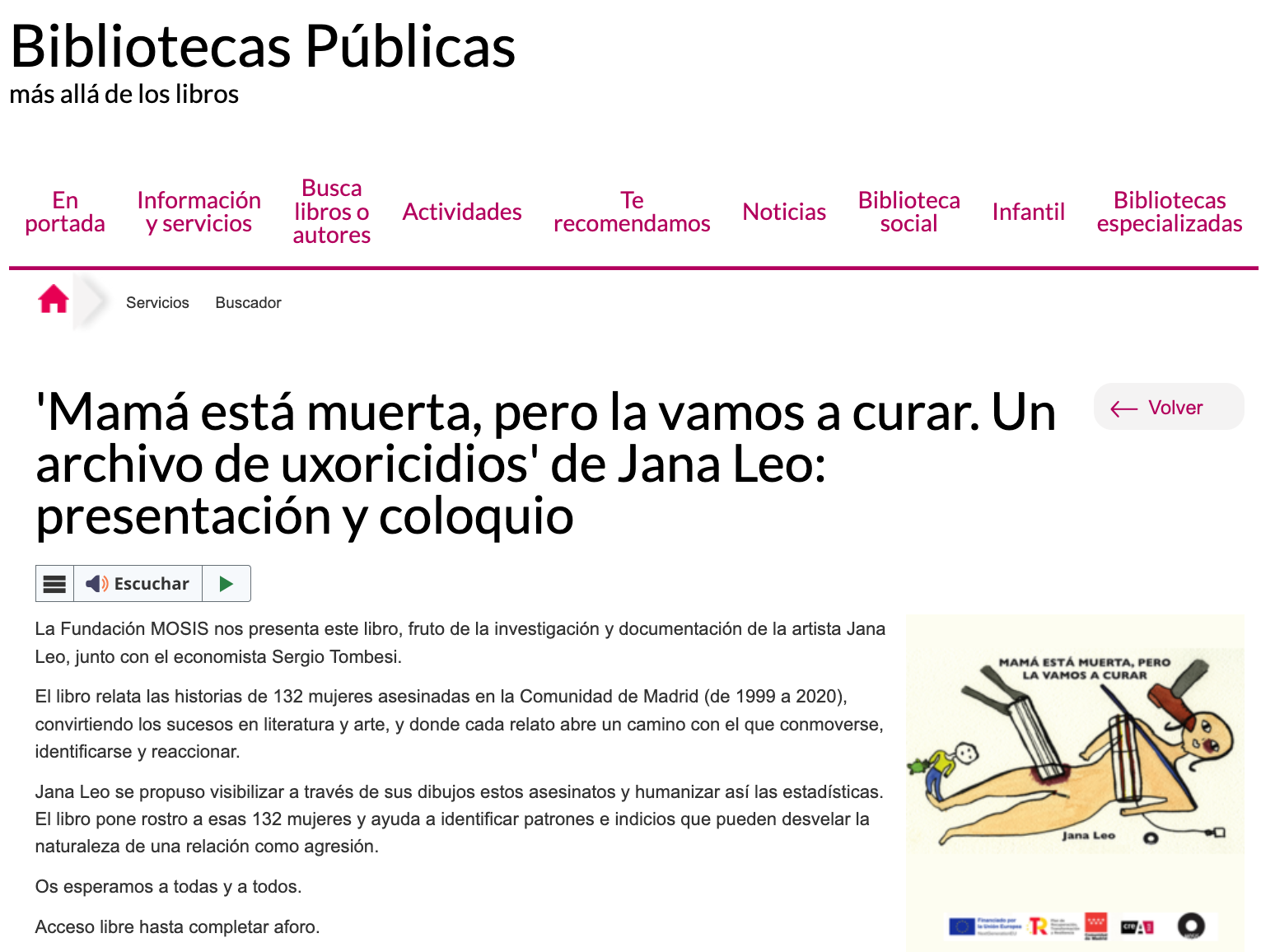
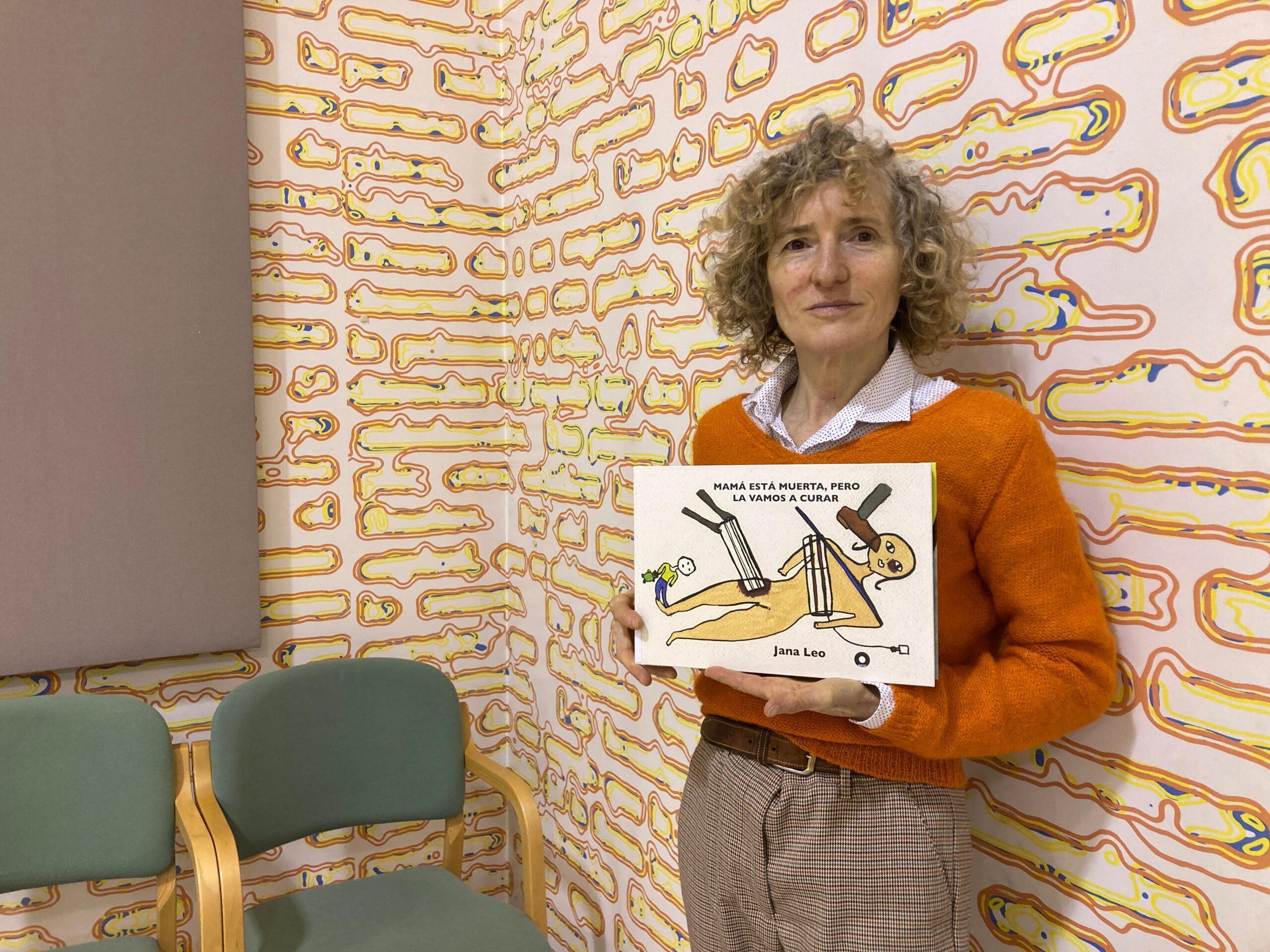
This is a book presentation for Mamá está muerta pero la vamos a curar, a visual archive detailing the cases of 132 women murdered by their male partners in the Comunidad de Madrid between 1999 and 2020. It also includes a presentation of the book’s companion app, https://artrededor.fundacionmosis.com/, and an introduction to MOSIS, showcasing how social action can be driven through art. The session kicks off with the book itself as an engaging object with compelling information, using it as a gateway to present the remaining elements of the project. Since the venue is a library, the focus will center on the book as an object—highlighting its literary and illustrative quality alongside its content, though the latter is not the sole point of interest.
The sequence is as follows:
-Presentation of the foundation and its team (first and last pages).
-The book is introduced, passing several copies around the audience while discussing its structure: preface and introduction, followed by the archive featuring a story on the left-hand page and a drawing on the right-hand page, and concluding with the research results and data tables.
-A slow reading of the dedication.
-Book synopsis, featuring one paragraph from the author and one from the publisher.
-Explanation of the book’s origins.
-Discussion about its authors.
-Focus on the object: THE BOOK.
-Summary of conclusions.
-Shared reading of about 5 cases.
-A broader project: introducing the app and helping attendees download and set it up.
A session lasts approximately an hour and a half.
This book introduces the first art book on gender-based violence, where narrative and drawing help to digest a very harsh reality. It makes the invisible visible: in a 21st-century visual culture, if there is no image, it does not exist. This book helps to give a face and a history to the statistics. There are no graphic representations of gender-based violence in Spain, which is why the book serves as a visual archive—an illustrated art book to make the victims visible. Gender-based violence exists, it is not an invention: the book provides images to confirm this through the emotional impact of the drawings. Victims of gender-based violence are not to blame, and this book helps recognize the patterns: the abuser abuses no matter what the woman does. This is clearly read throughout the 132 stories. Through drawing and storytelling, the book individualizes (without identifying) each murdered woman to remind us that gender-based violence is an issue of people, not a matter of statistics or data. Reading the stories, looking at the drawings, and studying the patterns helps identify the signs of gender-based violence, potentially alerting future victims and preventing further deaths.
A curious and cultured audience with a legitimate interest in social progress. In most cases, it consists of university students or graduates living in the neighborhood, or regulars at the library who have heard about the event. Occasionally, people from other neighborhoods who are particularly interested in the subject matter also attend.
The presence of a member of the MOSIS team; for most of the presentations Jana Leo has attended, but we now have a group of volunteers who conduct the presentations.
During the implementation process and while we had the European Union grant, all presentations were free of charge; as of June 30, 2026, please consult with Mosis.