
VIDAS [LIVES] consists of artworks, theater plays, artistic interventions, and everyday monuments that reference the people who have lost their lives in Madrid due to macho violence. These art pieces serve to bring visibility to gender-based violence by inserting small reminders into daily life, acting as a monument to keep “present” in our lives the women who lost theirs.
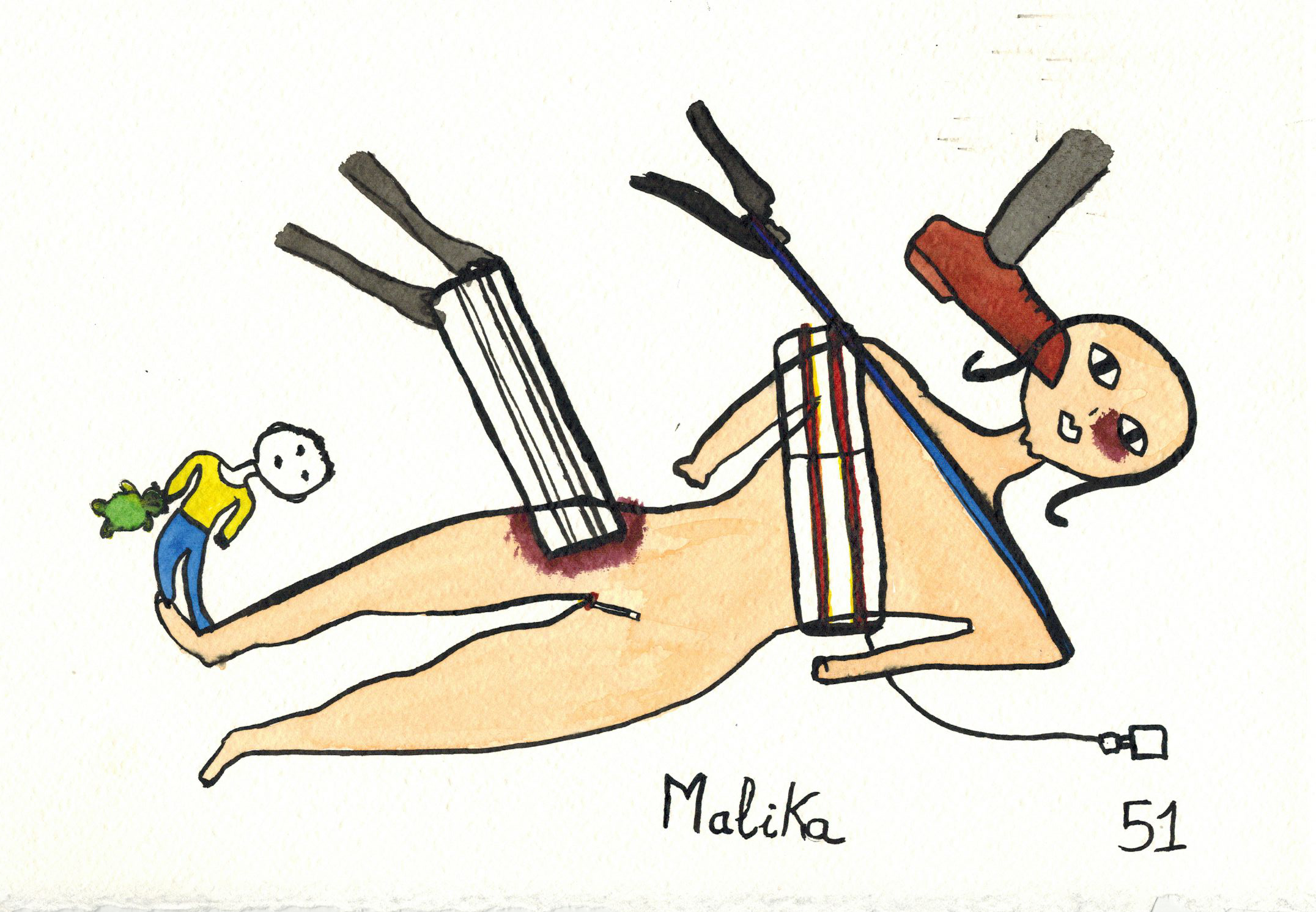
Uxoricides in the Region of Madrid between 1999–2020
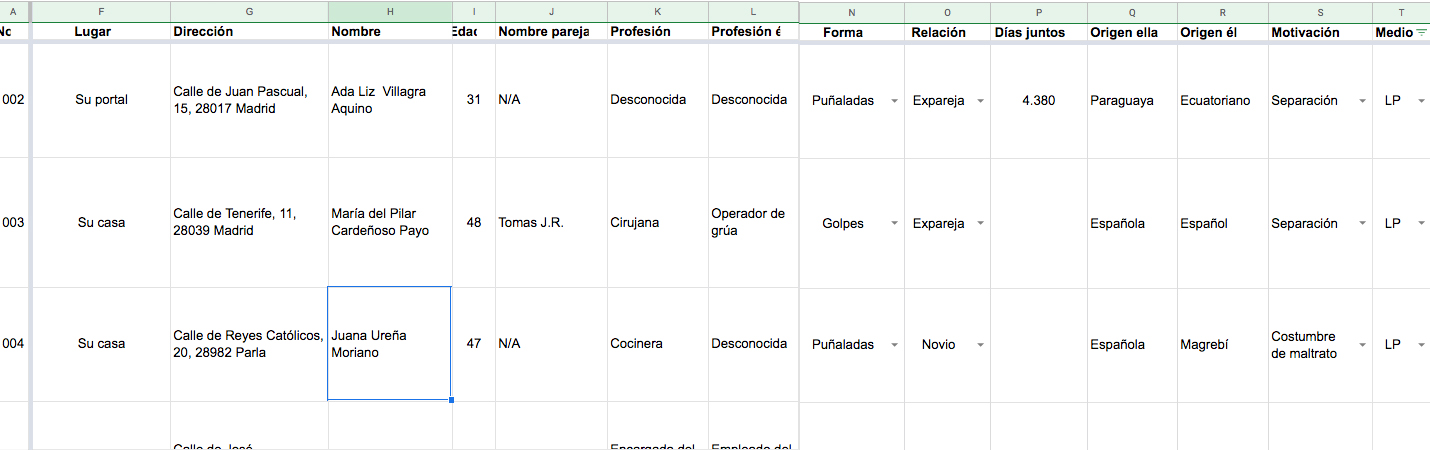
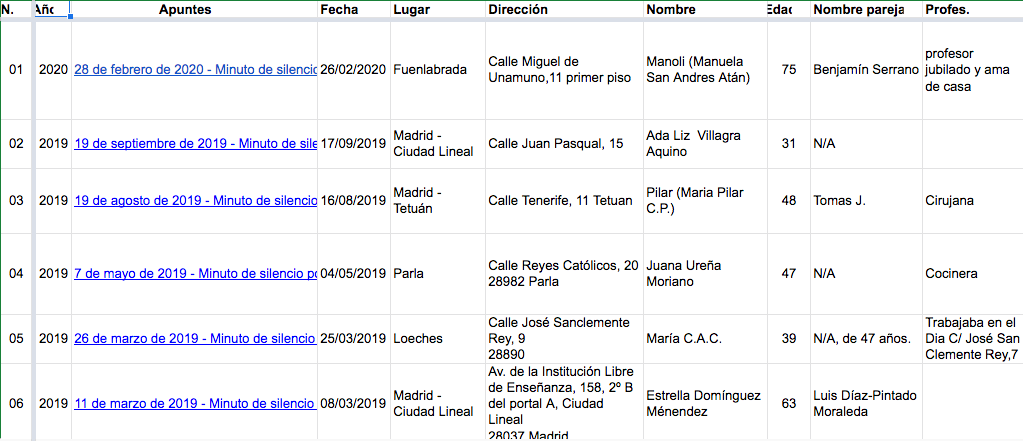
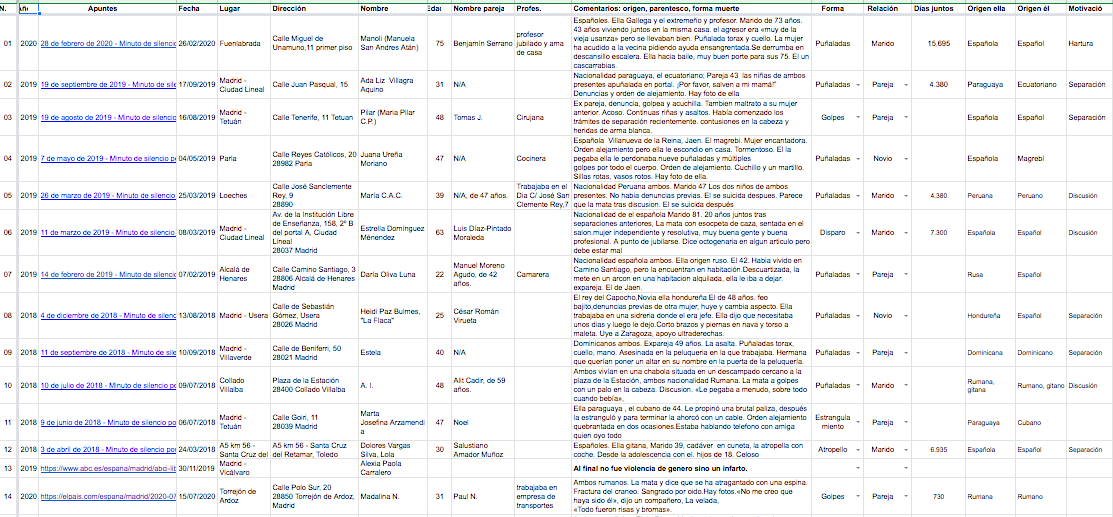
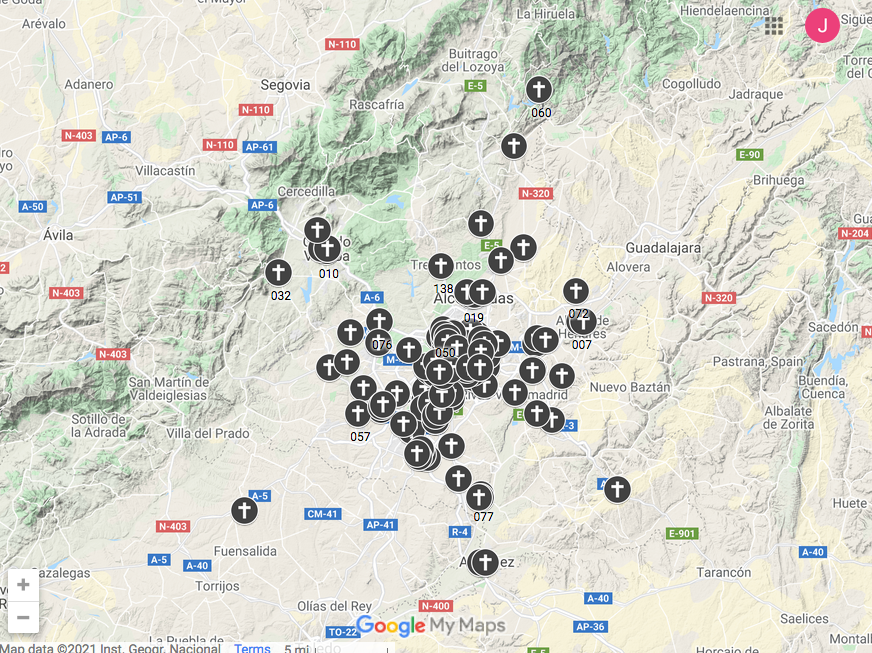
This project begins with a database containing information on the death of each of these women and a map showing where they died. Developed by Sergio Tombesi, the database is a piece of conceptual art in itself, offering a numerical portrait of the individual and their death. The data fields collected have shifted throughout the research process, as well as during the creation of the drawings. Unlike official statistical data, it introduces the number of days the couple had been together, as this is a value carrying significant emotional weight. While most newspaper articles refer to an argument as the trigger for the death, delving deeper into the history reveals a high percentage of cases with a pattern of regular beatings. This indicates that the driving motivation behind the death was not something sporadic—an argument—but rather a “habit of abuse.” The database, map, drawings, and texts offer a new perspective on gender-based violence; it focuses on interpersonal relationships and traces the unwritten right in a patriarchal society that privileges the man within a couple, thereby rescuing a new term to address this violence: uxoricide.