The Architecture and the Organization of the Cultural and Art Centers. Buenos Aires. 2006
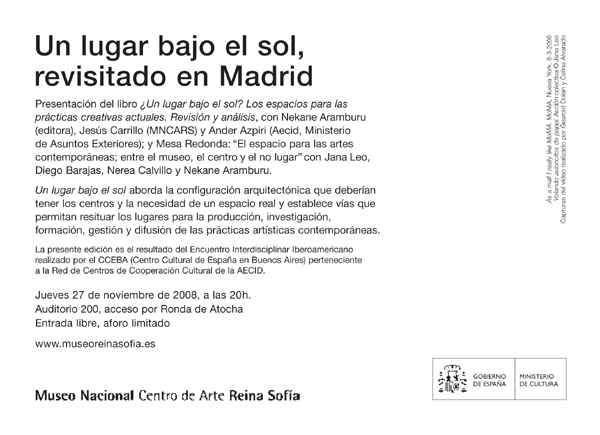
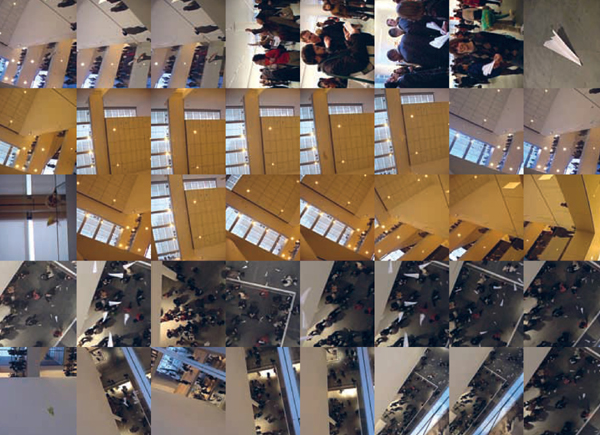
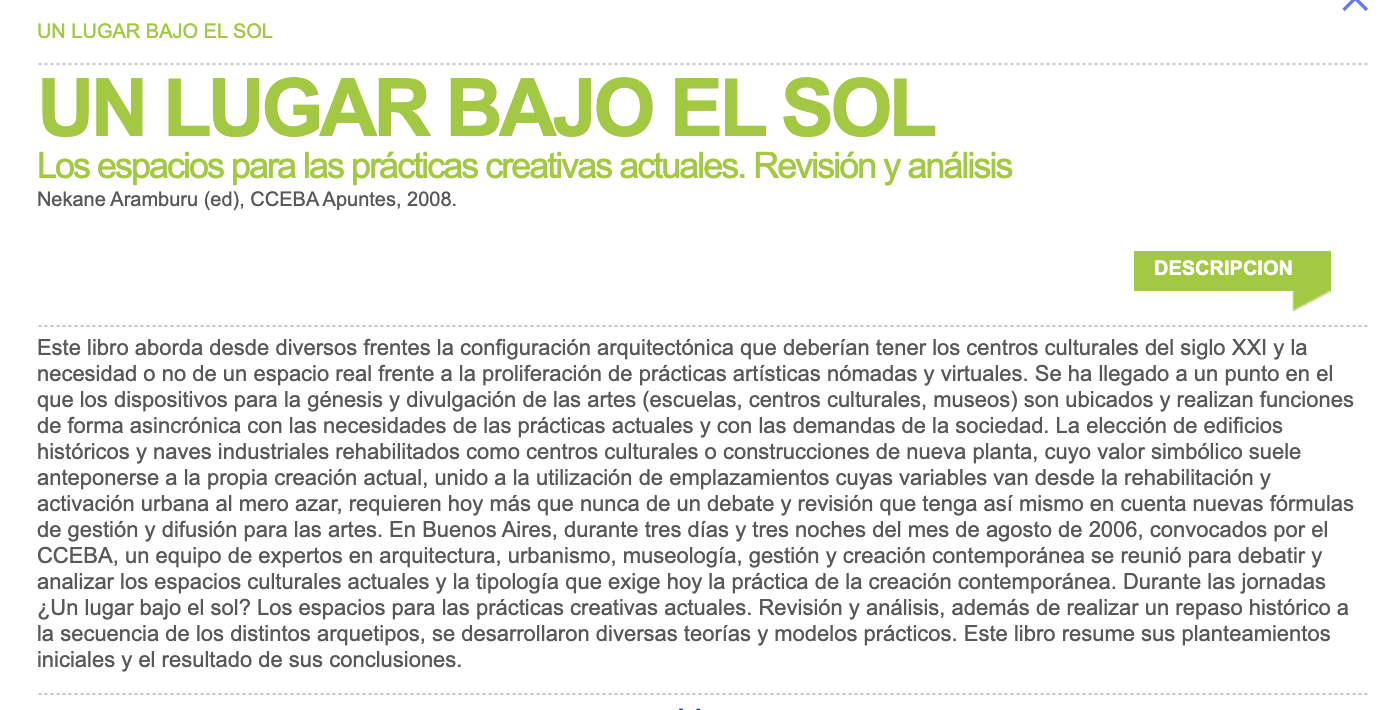
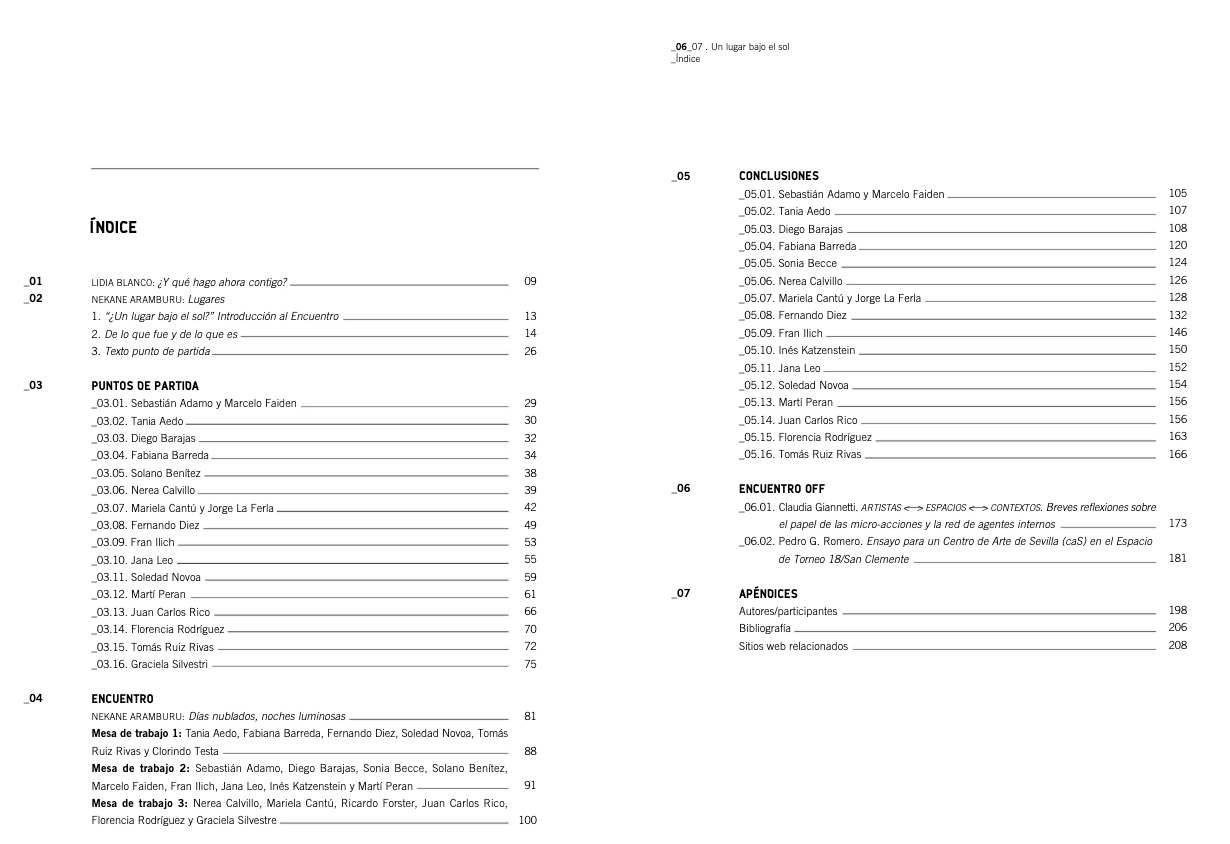
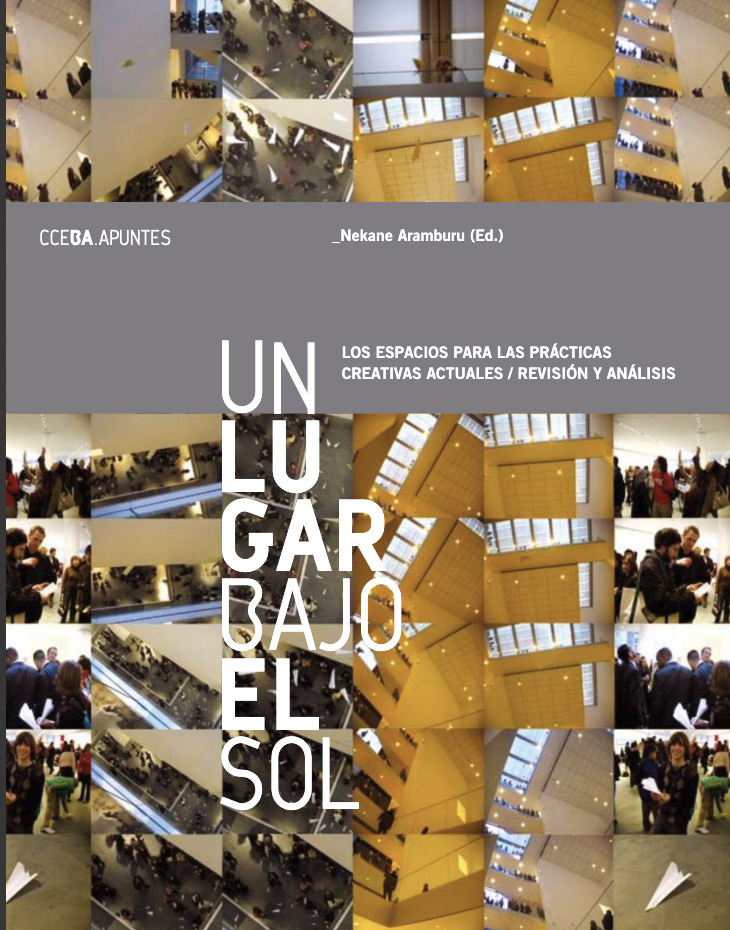
Organized by Nekane Aramburu in conjunction with the AECI, this was an intensive two-week workshop in which 60 Latin American professionals explored the topic of cultural centers. This was later turned into a book of the same name, edited by Nekane Aramburu; published by the CCEBA (Spanish Cultural Center in Buenos Aires) in August 2008 and presented at the MNCARS in November 2008. I had the opportunity to attend the event and later write an essay. The book’s cover features stills from the performance I had staged at MoMA, in which I launched paper airplanes bearing a manifesto about art centers functioning as shopping malls.
To Make Room—Jana Leo
“To make room”: this is a one-word expression related to space, and yet it is used to refer to the act of fostering and facilitating an action, of making something happen. For “to make room,” it is not just the space but the act of “giving” that is essential. “To give” is a generous verb that clashes sharply with the self-serving or private nature of museums. …Museums have more and more space and less and less art. An office does not guarantee work, just as the existence of a museum does not imply art. Thus, the proliferation of museums has nothing to do with the creation of “new spaces” but rather with yet another space—or even more spaces.
Art requires an irreplaceable space—that is, a place that exists only when it is given and disappears with the event. This view of place as something temporary and momentary runs counter to the very definition of the museum as a space of preservation rather than action. Providing space, as opposed to giving place, does not require constant effort or relentless renewal, but it is not sufficient in and of itself. Making room ceases to exist once what was given is gone. Creating space is a static act. The difference between a place and a space is that a space exists even when nothing is happening within it. We call something a “place” when it has a personal element—that is, when it has been appropriated. Appropriation is a way of making something one’s own through soft strategies, without the use of force. For example, in the case of “Flying Paper Airplanes,” which I performed at MoMA on March 24, 2006. A situation is created without asking for permission. The space is taken over, treating it as a stage. The existing space is utilized to transform it into a place by “making room” for something to happen….
….“I met her at the Cultural Center”—no one would want it to start that way. …..“All of Vermeers in New York” by John Jost, 2001: a young woman wanders among the paintings in a ritual of elegance; she is French. A middle-aged man uses his lunch break to wander through the daily routines depicted on Vermeer’s canvases. She, a bohemian, seeks extravagant luxury and the extraordinary, and acts without scruples. He, an executive, seeks an affair he doesn’t want to name—someone who will fill the end of each of his days with exuberant freshness and familiarity. This film is not exactly about a romantic encounter but rather about the encounter between art and the most jarring social decadence—and thus a critical reflection on the role of art’s place, including those spaces considered “places.” It seems as if both the French woman and the mature man are putting themselves on display alongside the artwork, revealing their most petty weaknesses in an exercise of sincere cynicism. Jost’s couple, like others wandering through the museum, try to benefit from the “aura” that art possesses—an aura that can create a different atmosphere, a state of mind that distracts from each person’s usual state. Art functions as a kind of atmospheric disguise. It isn’t worn; it is breathed in. The artwork functions as an invisible unifying force, serving more to bring kindred spirits together in front of the piece—or to bridge the gap between who one is and how one appears—than to connect the visitor with the artist. The artist plays a chlorophyll-like role; in a sort of mental environmentalism, he combats the dark clouds of indiscriminate and polluting consumerism.
In existing art spaces, there is little intersection between different typologies (the public with the artist through their work) but rather between the typologies themselves (the public with the public, artists with artists, etc.). It would be desirable for the typologies to overlap rather than intersect—intersection implies a central meeting point, and by definition, finding that point will only occur on an ad hoc basis. A point of interaction implies that it is something unique or at least central and predetermined, since the point is defined. But artistic actions are not directional but rather collateral or ritualistic, and attempting to apply direct rules to what a mediator is constitutes an inappropriate approach. The adjective that should govern the characterization of the art space is: AMBIGUOUS. Art spaces from the last century have the appearance and structure of something that moves and produces; it is no surprise that many of these art centers are housed in former factories or even recreate or mimic an industrial aesthetic. This is the modern—yet already obsolete—conception of the art site as an art center or a venue for presentation. Ambiguity is a concept that does not sit well with the term most closely associated with art over the past century: “production.” Production is obsolete once it ends, and the product finds its meaning in being consumed; it is a linear process with a purpose—to be useful—and an end—the moment it is finished. However, something that is art often has neither a purpose nor an end, yet it does not reduce the human condition to mere utility. Production reduces art to a doing (work, activity, actions) or a having (objects); yet art “is.”
Madrid, July 20, 2006